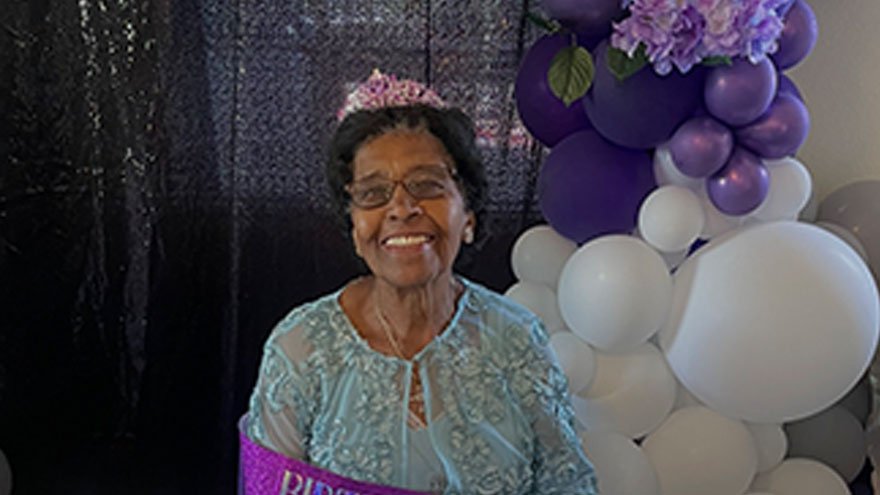
Celebrating Jeanne Bufkin's Remarkable Legacy at Renown
For seven decades, Margene "Jeannie" Bufkin has been a familiar face at Renown Health, touching countless lives through her dedication, compassion and
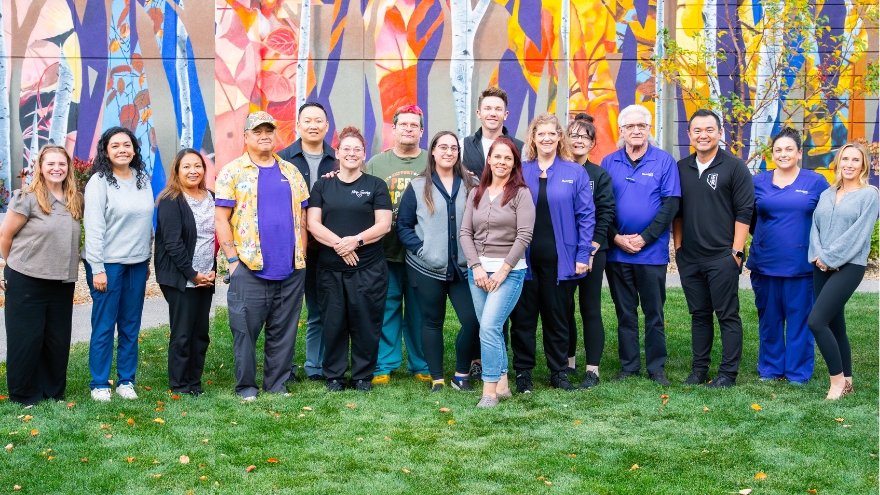
At Renown’s Crisis Care Center, Peer Support Specialists help patients through some of the hardest moments of their lives with compassion, practical support and a steady presence. We sat down with Valerie Butler, a Peer Support Specialist at the Crisis Care Center, to talk about what brought her to this work, what a typical shift looks like and why crisis care is such a critical resource for our community.
Here at the Crisis Care Center, we’re a 24/7 resource in northern Nevada for adults experiencing a behavioral health crisis. As a Peer Support Specialist, I’m a part of the team that helps stabilize patients in crisis, help de-escalate tough moments and remove barriers to care, like helping with resources, applications, transportation and follow-up.
I’m here to meet patients where they are, help them feel safe in the moment and to help them take the next right step, even if it’s a small one – sometimes, that “one little thing” is human connection.
I’ve been employed at Renown for four years. When I saw the Crisis Care Center starting to be built out in 2024, I thought, “That’s where I want to be.”
Patient contact was the catalyst for me becoming a Peer Support Specialist. Anytime you can relate with a patient, it’s paramount in healthcare. So, when I saw the job opportunity, I was immediately inspired to apply. The connections we make with patients, even if it’s just one person we impact and they leave happy and healthy, that matters a lot.
Other than the patients I see, what keeps me coming back is my coworkers. I love everyone I work with. Everybody here is amazing. It’s a team effort. We all have different reasons for being in this role. We don’t all have the same background and we don’t all have a past with substance abuse, but all our experiences inform the way we care for patients.
My route to this work was not a straight line, but it was consistently people centered.
I have a bachelor’s degree from the University of Arizona in public health. I originally went to college with the intention of going to nursing school, but I ended up pivoting my career into the restaurant industry. I also worked on-and-off at doctor’s offices doing both front office and back-office work. Eventually, I ended up working as a patient care advocate in one of Renown’s emergency rooms.
My goal is to continually enhance my skills in this field. Currently, I am working on my certification through the Center for the Application of Substance Abuse Technologies (CASAT) at the University of Nevada, Reno.
When I begin my shift, I start with a walk-through. Our team checks in on each patient, coordinates with the previous shift and identifies any legal holds. From there, the day is shaped by what each person needs. One thing I always ask every single person is, “Did you get enough sleep?” Sleep is restorative and impacts care more than someone might think. That question may seem small, but it reflects a bigger philosophy of crisis care: you cannot problem-solve a future when your body and brain are still in survival mode. Often, the first step is helping someone eat, hydrate, rest and feel safe. From there, we visit patients, talk, eat, drink and do whatever they need to help them throughout their stay. If they’re struggling to even leave their room, I’ll sit in their room and meet them where they are.
My attitude is, even if what we try doesn’t work, if I go the extra mile, maybe they’ll feel like someone actually cares about them. Many patients tell me they don’t even know the last time they got a hug from anyone.
When patients are getting ready to leave, we connect patients with the resources they need. We help them with applications if they decide they’ll commit to inpatient care, connect them with transportation and even provide clothes and food for them (we love making our patients little lunches before they check out of the facility). I also tell people about the importance of committing to something and following through. If you don’t feel comfortable going to Alcoholics Anonymous or Narcotics Anonymous, take a cooking class and learn a new recipe, or join an arts and crafts group, a book club, anything that shows you made a commitment.
In a crisis setting, trust must be built quickly, and it has to be real. I start by introducing myself clearly and setting a calm expectation. I’ll say something like, “I’m Valerie, and I’ll be with you in the next 12 hours. I’m here for you.”
Then I adjust to what the person can handle. If someone is detoxing heavily, I’m not going to overwhelm them with future plans or programs. You must meet them at a level that they can relate to. Sometimes you have to stand back and wait.
That ability to gauge the moment, when to give space and when to step in, is part of what makes peer support so powerful in crisis care. It is also why I always emphasize calmness and sensitivity. You have to always be patient-centric, and here you must be ultra-sensitive to that. The littlest things can upset a person and if they’re in crisis we can make or break that episode. Being a calm and collected Peer Support Specialist helps patients realize that they can count on you. I check on people a lot and I don’t want anyone to feel left out.
I see patients that come back for follow-ups, and I’m struck by how different they look and feel. 99% of them look so amazing, and I tell everyone how proud I am of them.
Once, a former patient recognized me at Starbucks, thanked me and told me she was doing well. It was one of those moments that reminded me why peer support belongs in healthcare.
The Crisis Care Center was built to remove friction at the exact moment when someone has the least capacity to fight through barriers. This isn’t like a hospital where you sit in a waiting room for four hours. Most of the time, the wait time to see a nurse at the Crisis Care Center is four to six minutes. We take them into a triage room and they see the nurse immediately before seeing a social worker and doctor or nurse practitioner. Everyone is here, which makes it easy to coordinate and collaborate closely on care.
And because we know the need doesn’t end when someone walks out the door, we’ve adapted overtime. We have a follow-up/return care option for people who need support bridging gaps in medication management, especially when waiting for mental health appointments can stretch for months. When appropriate, patients can return and be assessed by a nurse and provider for medication needs. With 24-hour access to Renown Pharmacy, we can help patients get what they need, including addressing barriers like transportation through options such as bus passes or covered rides.
To me, this kind of continuity is not an extra feature. It is the point. Mental health is ongoing. It’s never just, “OK, you’re healed now.”
As the community’s needs continue to grow, I hope crisis care can grow with it.
I want more people to understand that behavioral health crises are real medical crises, even if you cannot see them the way you can see a broken bone. Because it’s not a physical ailment, people sometimes don’t take it seriously because you can’t physically touch it.
I see similar misunderstandings around detox and substance use. The outside world can reduce it to willpower or simple instruction. It’s important to know that recovery isn’t as simple as telling someone, “Just don’t drink!” or “Don’t be sad!”
Expect the unexpected. The job requires diligence, constant safety awareness and the ability to intervene when something is escalating – but that rewarding feeling of caring for those in need is beyond worth it to me.
If someone loves one-on-one patient care, peer support is a calling worth exploring. It’s all about presence, consistency and the willingness to treat someone like a person when they feel at their worst.
To learn more about the Renown Crisis Care Center, visit renown.org/crisis or call 775-982-8870.