Having a primary care provider is important and some health insurance plans even require you to select one. But does that provider need to be a doctor (MD)? The good news is your primary care provider doesn’t need to be an MD. They can be an advanced nurse practitioner (APRN) or physician assistant (PA). We’re here to explain the differences between MDs, APRNs and PAs.
Have you ever called Renown Health to schedule an appointment with your doctor and the Contact Center offered you an earlier appointment with an APRN or PA? Did you wonder why? Perhaps you even declined because you were concerned about the continuity of your care, or wondered about the qualifications of the other practitioners who aren’t doctors. We’re here to answer your important questions about primary care providers and the different types.
Why would I want to see anyone other than a doctor?
In order to keep up with demand for primary care services and provide the highest quality care possible, Renown created care teams. This means our doctors, APRNs and PAs all work hand-in-hand to manage your health with the benefit of their combined expertise. This team approach provides you with more flexible scheduling options to see anyone on the care team, all with the same continuity of care.
How qualified are APRNs and PAs to treat patients?
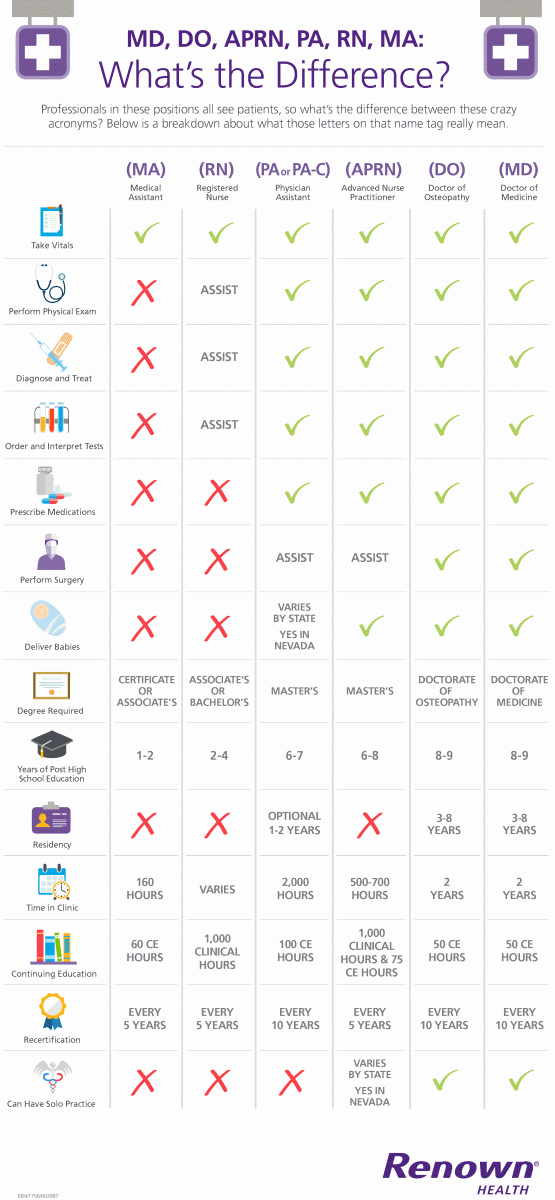
APRNs and PAs are highly educated in medicine with a minimum of a Master of Science degree and at least six years post-high school education. Some APRNs even have doctorate degrees. Similar to doctors, both positions have a minimum number of required clinic hours and participate in continued education.
Both APRNs and Pas are just as qualified as doctors (MDs and DOs) to conduct physical exams, diagnose and treat illnesses, order and interpret tests, write prescriptions and even deliver babies. There are some instances where you need a doctor, including specialized treatment of complicated or high risk conditions or surgery. Your APRN or PA will refer you to a doctor in those instances. You don’t need to worry about whom to see when – your care team will guide you based on your medical needs.
If I see an APRN or PA, will my doctor know about my visit?
Absolutely. The care team system ensures that everyone on your care team is aware of the details of your visit, regardless of who you’re seeing. Everything is clearly documented in your medical record so there are no gaps in care between visits.
Can an APRN or PA be my primary care provider?
Definitely. APRNs and PAs make excellent primary care providers and can be established with your insurance company.
Learn more about the differences between doctors, APRNs, PAs and more with this handy infographic.
Schedule A Doctor Visit | 775-982-5000
Renown Medical Group primary care providers provide annual exams by appointment.
Our providers coordinate each patient’s medical care including checkups, immunizations, referrals to specialists, lab work, X-ray & imaging and hospital admissions.
Flu season is here and getting your annual flu shot is one simple way to help protect yourself, your loved ones and the community. Annual flu vaccination helps reduce the risk of flu illness, hospitalization and serious complications. It can also reduce the severity of illness for people who are vaccinated but still get sick.
Renown Children’s Hospital reconnected former neonatal intensive care unit (NICU) patients of all ages with their physicians, nurses and care teams on Saturday, Sept. 26 during the annual NICU Graduation.
Cooler weather can mean drier skin, making fall a good time to give your skin a little extra care. And a few seasonal favorites from your kitchen can make an easy at-home face mask.