Every October, Breast Cancer Awareness Month puts a spotlight on screening, early detection and the strength of those who've been touched by breast cancer. But there's a part of the conversation that often gets left out: men. Inherited gene changes like BRCA1 and BRCA2 don't care about gender, and they can raise the risk of several cancers beyond breast and ovarian.
For one University of Nevada, Reno pre-med student, learning that lesson early through the Healthy Nevada Project, a community health research program by Renown Health, has become a source of confidence instead of fear.
Meet Michael
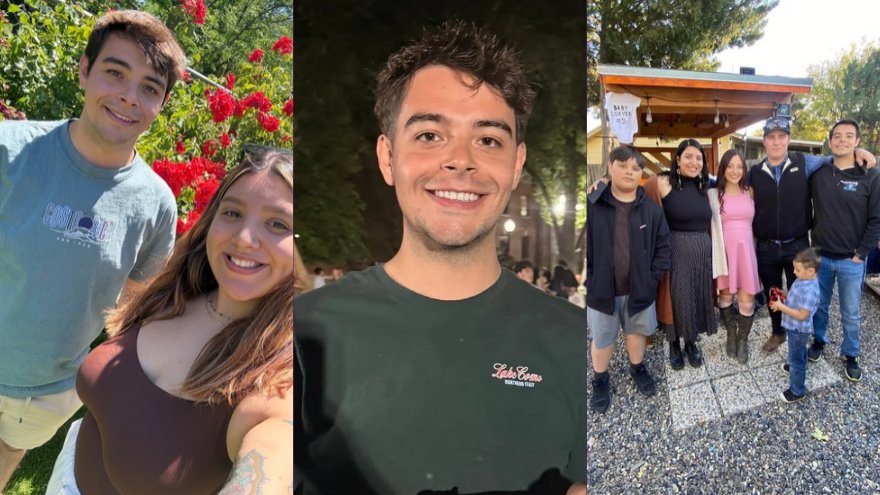
Michael grew up in Winnemucca, a rural town about two and a half hours from Reno, in a family with deep Nevada roots.
The third of four siblings, Michael is the first in his family to go to college. He came to Reno at the young age of 18 to study microbiology and immunology at the University of Nevada, Reno and is now in his final year, finishing a triple major in Biology, Spanish and French. His next goal? Medical school, and a career caring for patients right here in Nevada.
Looking for Answers Without the Price Tag
When Michael moved to Reno, he was inspired to take his health seriously as he transitioned into adulthood. Growing up, his family's insurance mostly covered emergencies only, so routine care wasn't always an option. As a college freshman, Michael scheduled his first checkup with a primary care doctor.
Always curious about genetics, Michael found that in-depth genetic health testing could cost $500 to $800. "For a college student, I could not afford that," he said.
That's when his family stepped in with an idea. His grandmother spotted a pamphlet for Renown's Healthy Nevada Project at her doctor's office in Reno and told him about it. Not long after, Michael saw the same pamphlet at his own first checkup.
"I scanned the QR code and was able to sign up really easy," he said. "I didn't have to pay anything. I signed a consent form, provided a simple sample at the lab and went on with my life as a student."
A Life-Changing Result
Months later, while studying abroad in France, Michael got a call that would soon change the course of his life. A member of the Healthy Nevada Project team shared that his results showed a BRCA2 gene mutation.
"They were very patient, very kind and very informative," he remembered. "Of course, I felt a little bit nervous; people usually feel like men can't get breast cancer. This phone call is actually when I first learned that men could get breast cancer."
When he returned home, Michael met with a genetic counselor through the Healthy Nevada Project's no-cost genetic counseling. She walked him through what his result meant, which cancers he was at higher risk for and what he could do about it, including starting certain screenings earlier than most men his age.
Why BRCA Isn't Just a "Women's Issue"
BRCA1 and BRCA2 mutations are part of what's called Hereditary Breast and Ovarian Cancer Syndrome (HBOC). The name can be misleading. For men, a BRCA mutation, especially BRCA2, can increase the risk of:
- Male breast cancer
- Prostate cancer
- Pancreatic cancer
- Melanoma
Because many men assume breast cancer genes don't apply to them, these risks are often overlooked, sometimes even after a positive result. Knowing your status means you and your care team can create a plan for earlier or more frequent screening, so cancers can be caught early or, in some cases, prevented altogether.
Having a BRCA mutation doesn't mean you'll develop cancer; instead, it means you have information that most people never get — and the chance to act on it.
Starting Early Brought Peace of Mind
For Michael, learning his status at age 18 felt empowering. "Honestly, I felt like I was going to be okay because I was doing this early," he said. "If prevention is going to happen, then this is the time."
Since then, he's leaned into healthy habits: paying closer attention to what's in his food, choosing more whole foods, walking around campus and taking the stairs instead of the elevator.
He also thinks about the people he loves. "You get a little bit nervous thinking about the future. What if something happens to my family?" he said. "So, with this knowledge, I can start educating my family, too."
One Result. A Whole Family's Health.
BRCA mutations are inherited, which means one person's result can unlock important information for their entire family. If you carry a BRCA mutation, your first-degree relatives (parents, siblings and children) have a one in two (50%) chance of carrying it, too. Second-degree relatives (grandparents, aunts, uncles, nieces, nephews and half-siblings) have a one in four (25%) chance.
This is why the Healthy Nevada Project encourages cascade screening, which involves testing family members after one person tests positive. Participants receive a family letter that explains the result and what relatives can do next. Michael has already shared his results with his family, and one of his sisters is eager to get tested.
For families in rural Nevada, like Michael's family in Winnemucca, testing doesn't require a trip to the city. The Healthy Nevada Project can mail cheek swab kits to rural participants, complete with a prepaid return envelope.
Spreading the Word
Michael has become an advocate among his friends, too. "I tell them the Healthy Nevada Project is no cost, so they can easily look it up and participate," he said. "Knowing their status can help them in their own personal health journey and their family as well, since if you know your status, there's a good chance your family might share that status."
That message matters. Many Healthy Nevada Project participants are middle-aged adults, but the earlier someone learns about an inherited risk, the more time they have to focus on prevention and early detection.
It's also part of why he's drawn to medicine. While he's interested in pathology, family medicine is also high on his list. "Education in terms of your health is something I'm interested in," he said. "I feel like family medicine is the best way to do that." Wherever his path leads, he plans to stay in Nevada.
Michael's Advice for Young Adults
If you're a college-aged student or in your early adulthood era and have never thought about your genetic health, Michael says the first step is easier than you think.
"Just get started. There are great resources out there," he said. "If you're willing to take the step into genetic screening, definitely reach out. These healthcare providers are here to help us, so there's nothing to worry about. They will answer all your questions."
Get No-Cost Genetic Testing Through the Healthy Nevada Project
This Breast Cancer Awareness Month, give yourself and your family the gift of knowledge. In partnership with the Helix, our precision healthcare partner, Renown's Healthy Nevada Project offers no-cost genetic testing for Nevadans aged 18 and older. Specifically, they screen for inherited risks linked to:
- Hereditary Breast and Ovarian Cancer Syndrome (BRCA1 and BRCA2)
- Lynch Syndrome, which raises the risk of colon, endometrial and other cancers
- Familial Hypercholesterolemia, which can cause heart disease at an earlier age
Results are added to your medical record, and if an increased risk is found, a trained professional will contact you and offer a no-cost genetic counseling session.
Ready to get started? Enroll today in MyChart or call 775-982-6914 for assistance scheduling your lab appointment.