
Get Ready for Baby with Childbirth Classes
Expecting a baby? At Renown Health, we offer a wide variety of complimentary educational classes for expecting and new families.

Irregular periods, stubborn acne, unwanted hair growth or trouble getting pregnant can sometimes seem unrelated. But for many people, these symptoms may be connected to polycystic ovary syndrome (PCOS).
PCOS is a common hormonal and metabolic condition that can affect periods, fertility, skin, weight and long-term health. Symptoms can look very different from person to person, which can make PCOS hard to recognize.
Reviewed by: Carilyn Hoffman, MD, with Renown Women’s Health.
Appointments: 775-982-5640
Polycystic ovary syndrome or PCOS, is a hormonal and metabolic condition that can affect ovulation, menstrual cycles, fertility and other areas of health.
Despite its name, you do not need to have ovarian cysts to have PCOS.
In adults, diagnosis is usually based on having at least two of these three features after other possible causes are ruled out:
Your health care provider will determine which tests are right for you based on your symptoms and health history.
PCOS can look different from person to person. Common signs and symptoms may include:
Not everyone with PCOS will have all of these symptoms.
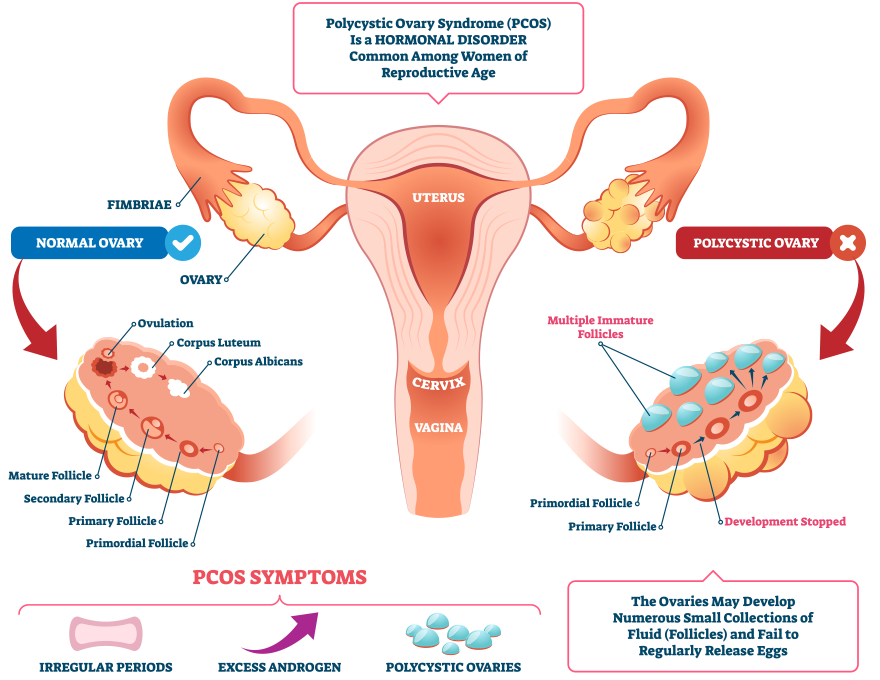
The exact cause of PCOS is not known. Genetics, hormones and insulin resistance may all play a role.
PCOS often runs in families. Many people with PCOS also have insulin resistance, which means the body has more difficulty using insulin effectively.
PCOS can affect people of all body sizes.
Diagnosing PCOS may include reviewing your menstrual and health history, a physical exam and blood tests.
Some patients may also need an ultrasound. Your provider will also consider other conditions that can cause similar symptoms.
There is no single test that can diagnose every case of PCOS.
Treatment depends on your symptoms, health goals and whether you are trying to become pregnant.
Treatment may include:
For people with PCOS who are trying to become pregnant, medications can help stimulate ovulation. Letrozole is often used as a first treatment option. Some patients may also benefit from seeing a fertility specialist.
Your care plan should be based on your individual needs rather than a one-size-fits-all approach.
PCOS affects more than periods and fertility. Over time, it can increase the risk of several health conditions, including:
The overall risk of endometrial cancer remains low, but going long periods without a menstrual cycle can increase the risk of changes to the uterine lining.
Regular checkups can help your health care provider monitor these risks and recommend preventive care.
PCOS can affect emotional health as well as physical health.
People with PCOS have a higher risk of anxiety and depression. Symptoms such as acne, unwanted hair growth, changes in weight or fertility challenges can also affect body image, confidence and quality of life.
If PCOS is affecting how you feel emotionally, talk with your health care provider. Mental health is an important part of PCOS care.
People with PCOS have a higher risk of obstructive sleep apnea, even when body weight is not a factor.
Talk with your provider if you regularly experience:
Sleep problems can affect both physical and mental health and are worth discussing.
Many people with PCOS have healthy pregnancies, but PCOS can increase the risk of certain pregnancy complications, including gestational diabetes and high blood pressure.
If you have PCOS and are planning a pregnancy, talk with your health care provider about your health, medications and any steps you can take before becoming pregnant.
Consider talking with your health care provider if you have irregular periods, signs of high androgen levels, trouble getting pregnant or other symptoms that may be related to PCOS.
Getting a clear diagnosis can help you understand your symptoms, protect your long-term health and find treatment that works for you.